

SENIOR RESEARCHER II FELIX-ADRIAN TENCARIU (Project Leader)
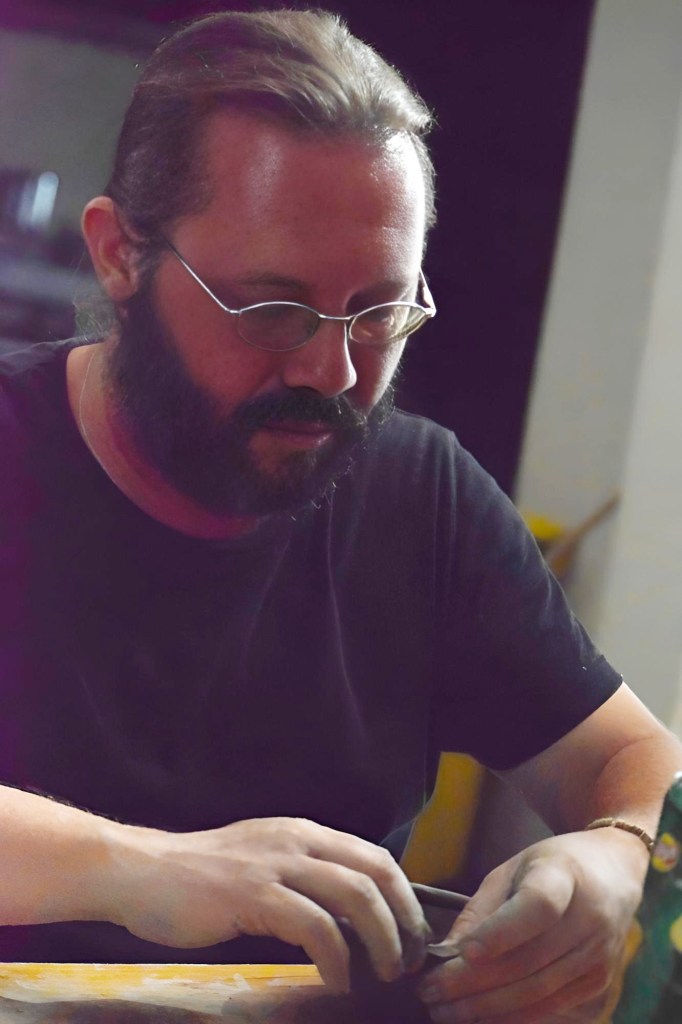
Dr. Tencariu Felix-Adrian is a senior researcher at ICI with expertise in the area of prehistoric archaeology. Expert archaeologist (according to the Register of Professional Archaeologists from Romania), he is closely interested in different issues and topics of the chaine opératoire of prehistoric pottery and the Neolithic and Chalcolithic periods in South-Eastern Europe. His research was oriented towards integrating ethnoarchaeology, experimental archaeology and archaeometry to enhance the archaeological interpretation and help understanding past behaviours and technologies. His contributions are reflected in articles, studies, books and book chapters, participation and organization of conferences, etc. He is also trained and gained significant field experience in using equipment and software specific to non-invasive sensing techniques and geophysical methods (GPR and magnetometry).
SENIOR RESEARCHER II ANDREI ASĂNDULESEI
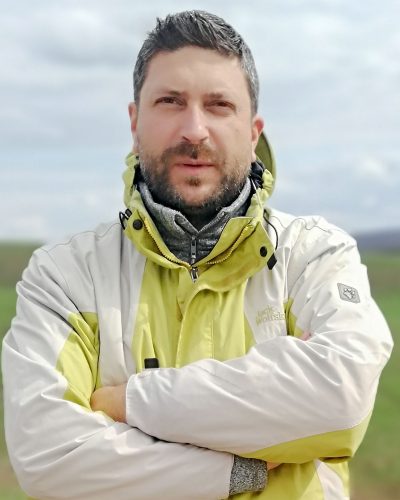
Dr. Andrei Asăndulesei is senior researcher/archaeologist at ICI with expertise in the area of prehistoric archaeology. His main responsibilities include non-invasive geophysical prospection, aerial photography, LiDAR/TLS interpretation and GIS applications in archaeology. He is closely interested in the analysis of the ancient human settling patters and internal spatial organizations of settlements in order to better understand the interdependence relationship between communities and the environment. He received several scholarships abroad, as part of international multi-institutional research teams from Germany, Austria, France, and Australia, in which he had the possibility to conduct non-invasive field surveys in Kurdistan, Iraq, Azerbaijan, Georgia, Caucasus, Russia, Germany, and the R. Moldova. As project manager, he coordinated the UEFISCDI grant Non-destructive approaches to complex archaeological sites. An integrated applied research model for cultural heritage management (2014–2017). His contributions are reflected in articles, studies, books and book chapters, participation and organization of conferences, etc.
SENIOR RESEARCHER II VIORICA VASILACHE

Vasilache Viorica is a scientific researcher II, PhD in Chemistry, within the Interdisciplinary Department of Sciences – Arheoinvest Center, with over 25 years of research experience. The research activity is carried out in the Laboratory of Scientific Investigation and Conservation of Cultural Heritage Assets being specialized on the techniques provided: Scanning Electron Microscopy with Energy Dispersive X-Ray spectroscopy (SEM-EDX), micro-FTIR, optical microscope, derivatograph, spectrophotometer portable. Her experience in the fields of cultural heritage conservation, scientific investigation of archaeological and museum artifacts, materials science and environmental science has materialized in numerous publications (5 books, over 100 papers – ISI and BDI, 18 inventions) and participation in national and international scientific events, at invention salons, with a Hirsh index of 15 in Web of Science. She has been involved in research activities carried out in collaboration with prestigious research and higher education institutions in the country and abroad and was part of the steering committee of 23 Romanian and two foreign PhD students (from Iran and Jordan). She was part of the organizing committee of the 13 editions of the European Exhibition of Creativity and Innovation – EUROINVENT, is secretary of the International Journal of Conservation Science (www.ijcs.uaic.ro), indexed by ISI, has been a member in over 20 national projects and is responsible for two component projects.
SENIOR RESEARCHER II GEORGE BODI
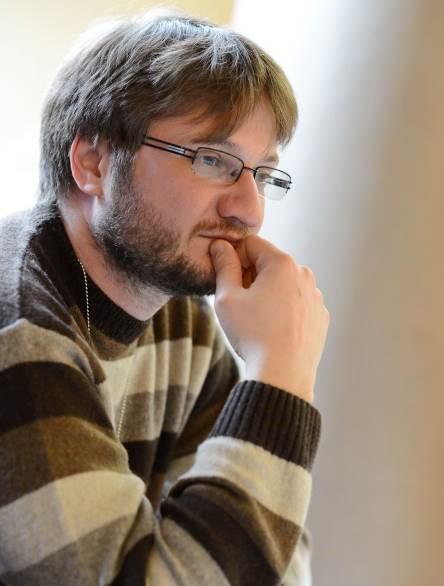
Historian and archaeologist, with interests in prehistoric archaeology, theoretical archaeology, landscape archaeology, cultural anthropology, archaeometry (especially the analysis of prehistoric ceramics). Specialist in research on the Cucuteni Eneolithic culture. He participated in archaeological excavations in Târgu Frumos, Hoiseşti, Isaiia, Poduri, etc. In July-August 2006 he was invited to the archaeological excavations at Çatal Höyük (Turkey). He has published two books and over 30 articles, editor of five volumes of studies.
SENIOR RESEARCHER III FLORICA MĂȚĂU
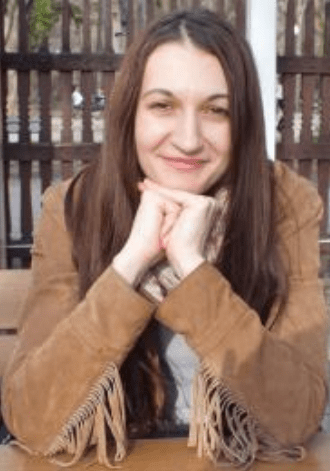
Florica Mățău (0000-0002-9971-7997) is a resercher at ICI-UAIC, Science Department, Arheoinvest Center. She defended her PhD in archaeology investigating Metallurgy and society at the end of the Bronze Age and the beginning of the Iron Age in the Lower Danube region at the Faculty of History (UAIC) and her postdoctoral studies at the Faculty of Physics (UAIC) exploring the potential of various physical methods in the analysis of Cucuteni pottery technology. In her studies, she follows an archaeometric approach in the investigation of the various crafts (e.g. metallurgy, pottery, textiles) practiced during the Chalcolithic and Bronze Age periods in eastern Romania. Her research with a strong interdisciplinary bias aims to explore various aspects related to creativity, diversity, adaptation and cross-craft interactions which characterizes the various technological sequences applied by the prehistoric artisans. By integrating traditional archaeological and various archaeometric methods in the analysis of ordinary and exotic artefacts, she addresses issues regarding the extent of the various craft production and exchange systems practiced by the prehistoric communities.
SENIOR RESEARCHER III RADU GABRIEL PÎRNĂU
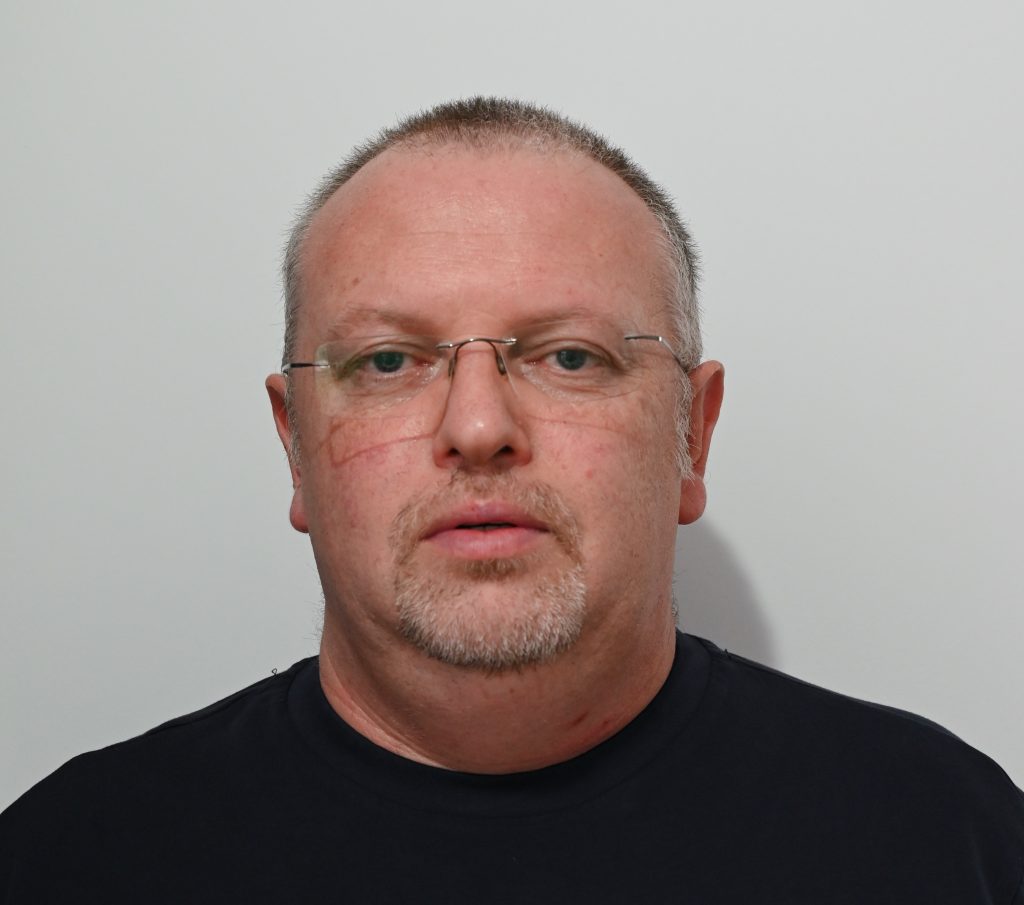
Radu Gabriel Pîrnău was born in Iași, on May 27, 1977. He obtained his bachelor’s degree in Geography-Environmental Science (1999), his master’s degree in Soil Science (2002), and his doctorate in Geography (2011), respectively, at the “Alexandru Ioan Cuza” University of Iași, Faculty of Geography and Geology. In 2002, he followed a documentation and specialization internship in Leuven, at the Soil Institute of Belgium. During the period 2000-2012, he was a pedologist at the Office for Pedological and Agrochemical Studies in Iași. He is currently a scientific researcher at the Geographical Research Center of the Romanian Academy-Iași Branch, where he has been working since 2014. Current research interests include the genesis, evolution and classification of soils, the description of soil profiles through digital morphometric methods, as well as the analysis of soils from archaeological sites to identify the factors and pedogenetic processes that contributed to the formation of the current soil cover.
SENIOR RESEARCHER III MIHAELA ASĂNDULESEI

Mihaela Asăndulesei is a scientific researcher III in the Department of Social Sciences and Humanities, the Institute of Interdisciplinary Research, “Alexandru Ioan Cuza” University of Iași. She completed her PhD studies in History in 2017. She has been a member of several research projects with national funding (2014-2022), and during her doctoral studies she also received two scholarships (one doctoral and one Erasmus, Ianus II project). Her main research areas are: ethnoarchaeology, toponomastics, cultural anthropology of salt and interdisciplinary research methods in archaeology. She is directly interested in the complex analysis of the relationships between natural resources, archaeological data, historical data and the behavior of human communities, as well as in the comparative study of historical, toponymic, linguistic information and that resulting from her own ethnographic investigations. In terms of research valorization, she has published, individually and in collaboration, several articles in journals indexed in international databases or conference proceedings, published by prestigious international publishers or indexed by Web of Science. She has also co-edited a volume of studies at an international publisher and participated in numerous symposia, colloquia and congresses organised both in Romania and abroad.
YOUNG RESEARCHER CASANDRA BRAȘOVEANU
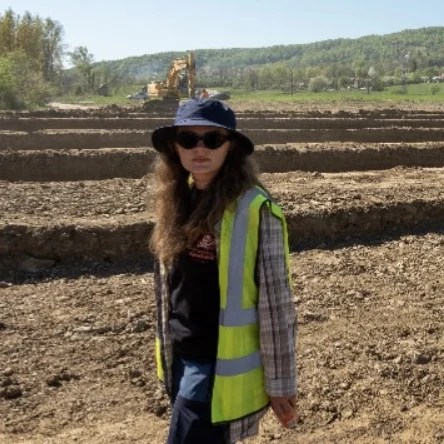
The primary contributions lie in interdisciplinary archaeology and cultural heritage documentation, PN-IV-CEI-BIM-CRM-2024-1 focusing on the usage of non-invasive methods and techniques for prehistoric archaeological research in Romania, as well as the study of material culture – key areas that directly support the objectives of the current proposal. Addressing this topic, which draws on expertise from diverse scientific fields and requires an interdisciplinary methodology, showcases the project member’s expertise, that has been honed through international training (at Dokuz Eylül University, Izmir, Turkey), participation in specialized workshops (e.g., the Archaeometry Workshop on Bioarchaeology, organised by University of Tübingen’s Archäometrie Kolleg, and the Curt-Engelhorn Centre for Archaeometry in Mannheim; the Geophysics and Dating in Archaeology Workshop, attended at the University of Szeged, Hungary, etc.), and collaboration with multi-institutional research teams (including the “Ludwig Maximilian” University of Munich for non-invasive field surveys in Georgia). Additionally, her involvement as a team member in various Romanian research projects has facilitated the dissemination of project outcomes at national and international scientific conferences (in Italy, Spain, The Netherlands, Hungary, etc.). Her international visibility and capacity for independent research grew substantially during her role as project manager for An interdisciplinary approach to the study of the tumular necropolises and their link to the Late Bronze Age settlements (2022-2024), a project she successfully led, with significant results published in WOS, ERIH, and BDI journals and presented at multiple scientific conferences.
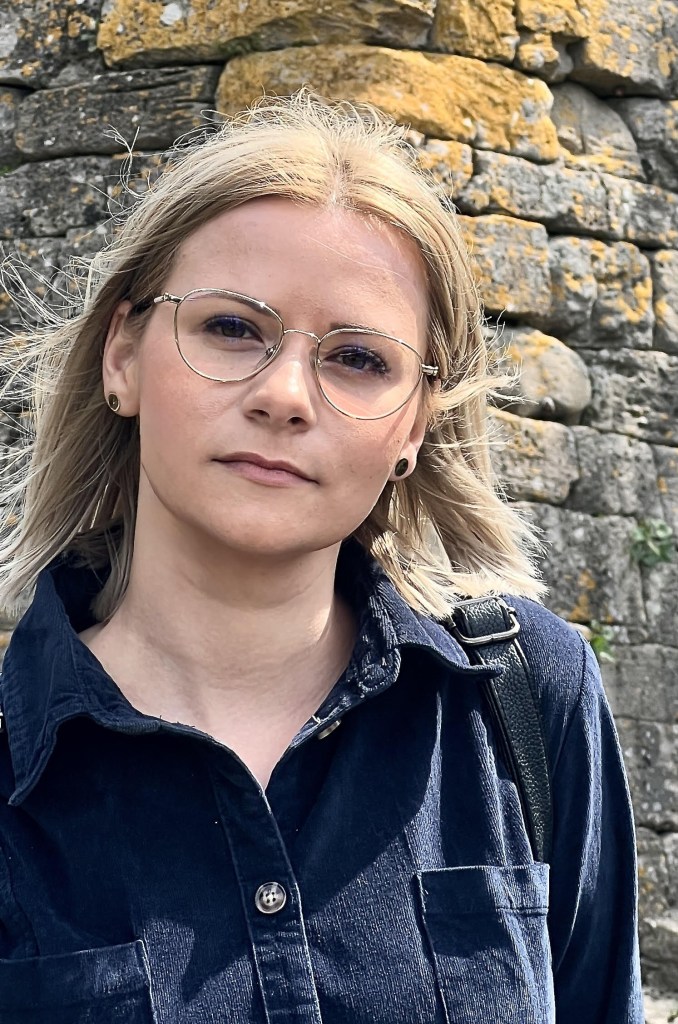
Ana Drob is a scientific research assistant at the Arheoinvest center, with her main fields of interest being prehistoric archaeology and archaeometry. As an archaeologist, her field experience is represented by her participation in numerous archaeological sites in Romania, coming into contact with a diverse archaeological materiality. During her doctoral studies, she focused her research on the interdisciplinary investigation (OM, SEM-EDX, µFT-IR, TGA/DTA) of pottery, especially that of the Bronze Age in the East-Carpathian area, from a technological and functional perspective. The main research direction is related to prehistoric ceramic production technologies involving the sources of raw materials for pottery manufacturing, finishing methods and techniques, firing temperatures and ways of using containers. Another perspective is represented by the archaeometric analysis of metal objects by studying corrosion compounds, patina and alloy type.
LABORATORY ASSISTANT RADU ALEXANDRU BRUNCHI
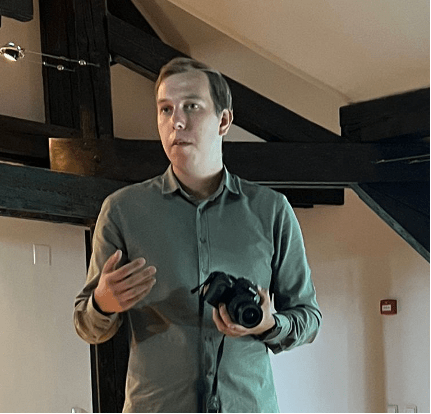
Radu Alexandru Brunchi is an archaeologist with a PhD in Public Archaeology. His extensive experience in field research, coupled with a strong academic background, has equipped him with a deep understanding of archaeological methodologies and the effective dissemination of archaeological knowledge. With a keen interest in prehistory and landscape archaeology, Radu has contributed significantly to numerous research projects. His expertise in modern techniques such as LIDAR and GIS has enabled him to unlock the secrets of the past and share them with a wider audience. Radu’s commitment to public engagement is evident through his active participation in outreach programs and his publications in both academic and popular media.
PHD STUDENT MARIA-CRISTINA CIOBANU
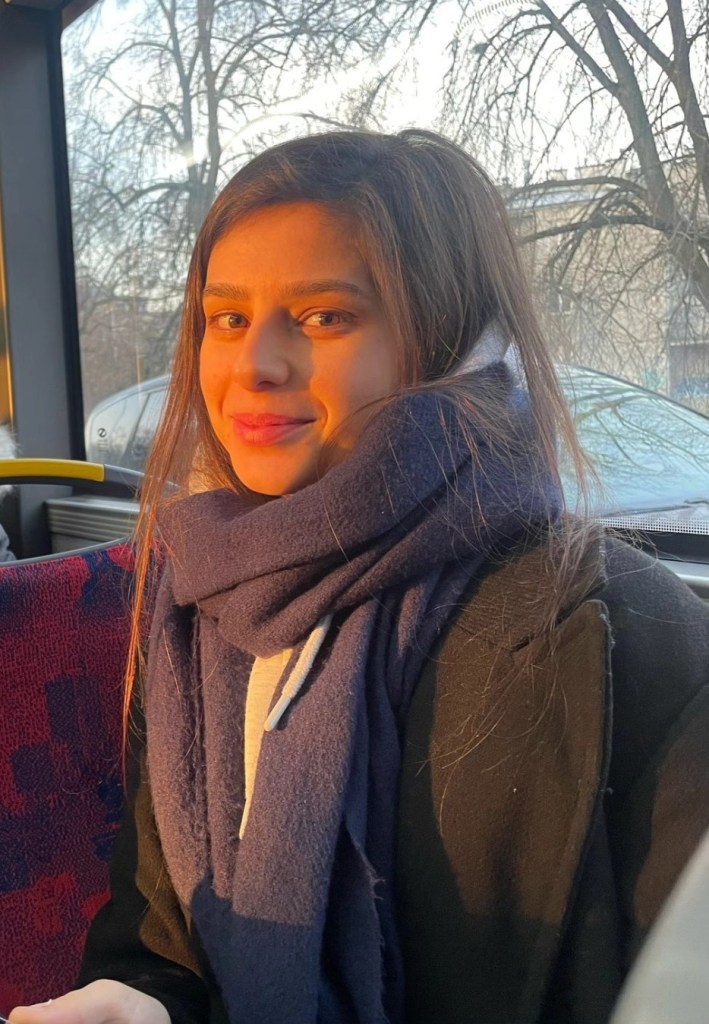
Maria-Cristina Ciobanu is a dedicated PhD candidate specializing in prehistoric archaeology, with extensive field experience. Since 2020, she has participated in numerous excavations, contributing to over ten research reports. Her work spans preventive archaeology, burial site investigations, and experimental archaeology, focusing on ceramic production and pigment use. She has co-authored multiple scientific articles, presented at prestigious international conferences, and played a key role in organizing academic events. Passionate about both research and fieldwork, Maria-Cristina is an emerging scholar in archaeology.
 Potcraft